When clients experience cognitive decline due to the onset of Alzheimer’s or dementia, they become more vulnerable to scams, coercion, and manipulation. This makes it important to put protections in place in a timely manner. However, advisors often hesitate to raise the topic for fear of offending the client.
Like doctors who recommend certain tests at specific ages, our Cognitive Ability Test is recommended for clients aged 65 and older. Positioning this as a best practice removes much of the sensitivity around the conversation.
Accessing Cognitive Ability Test
You can access it the same way as the other questionnaires in the Risk & Behavioral Profile. More information here.
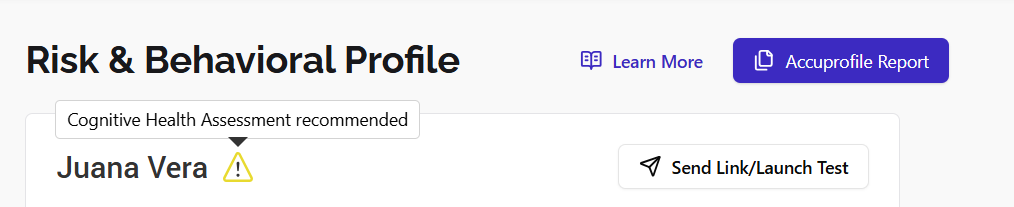
If the client is aged 65 or older but has not taken the Cognitive Ability Test, you will see a yellow alert icon next to their name on the Risk & Behavioral Profile page. When you hover over it, a tooltip will indicate that the Cognitive Ability Test is recommended.
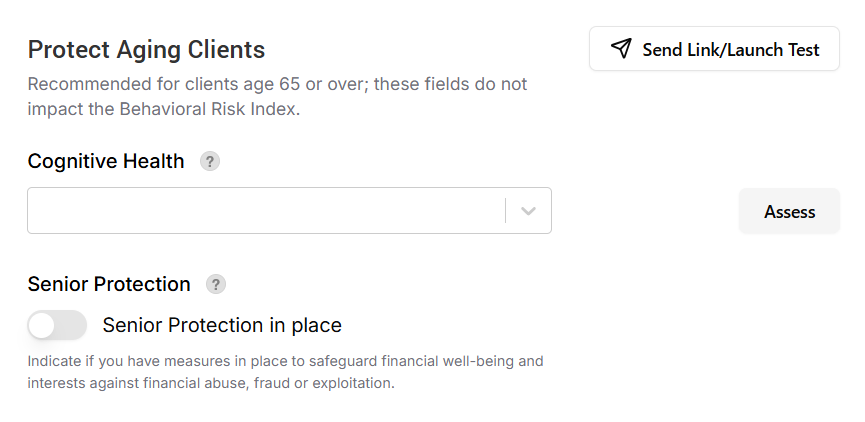
Scrolling down the page, you will find the Cognitive Ability Test:
Reviewing Results
Clients typically receive an Excellent or Very Good score at age 65, establishing a baseline. If a decline occurs (see below), clients can see it themselves, so you do not have to be the messenger.
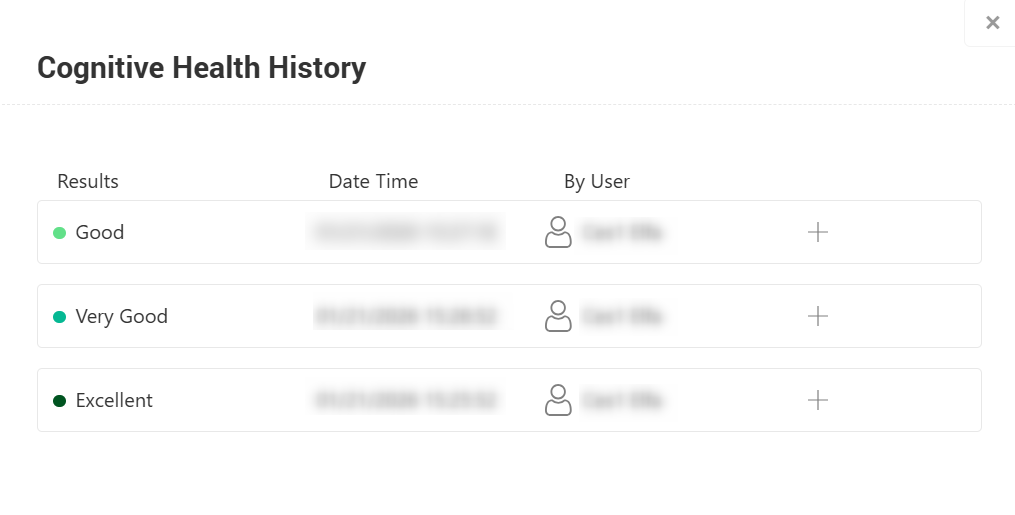
Quick note: the result shown at the bottom is the oldest (earliest) result.
We grade it generously. When a client receives a “Good” rating, it’s time to put protections in place. A red alert icon will prompt you to take action.
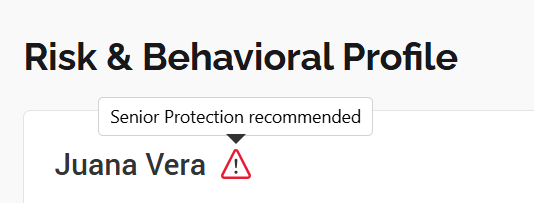
Putting Protection in Place
The action typically involves having a Power of Attorney in place. With the client’s consent, advisors can also offer to verify unusual withdrawals and decline withdrawal requests that appear suspicious. This helps protect clients from scams.
After that, you can now toggle the Senior Protection in the system:
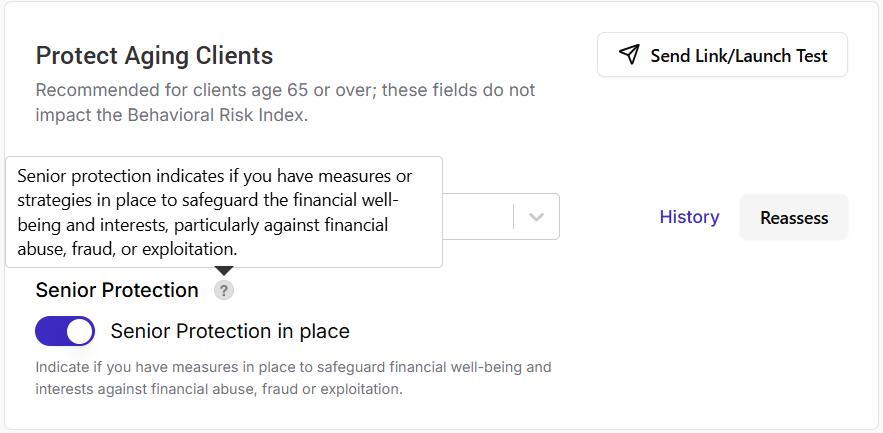
A green shield icon will replace the red alert icon, indicating that protection is in place: